

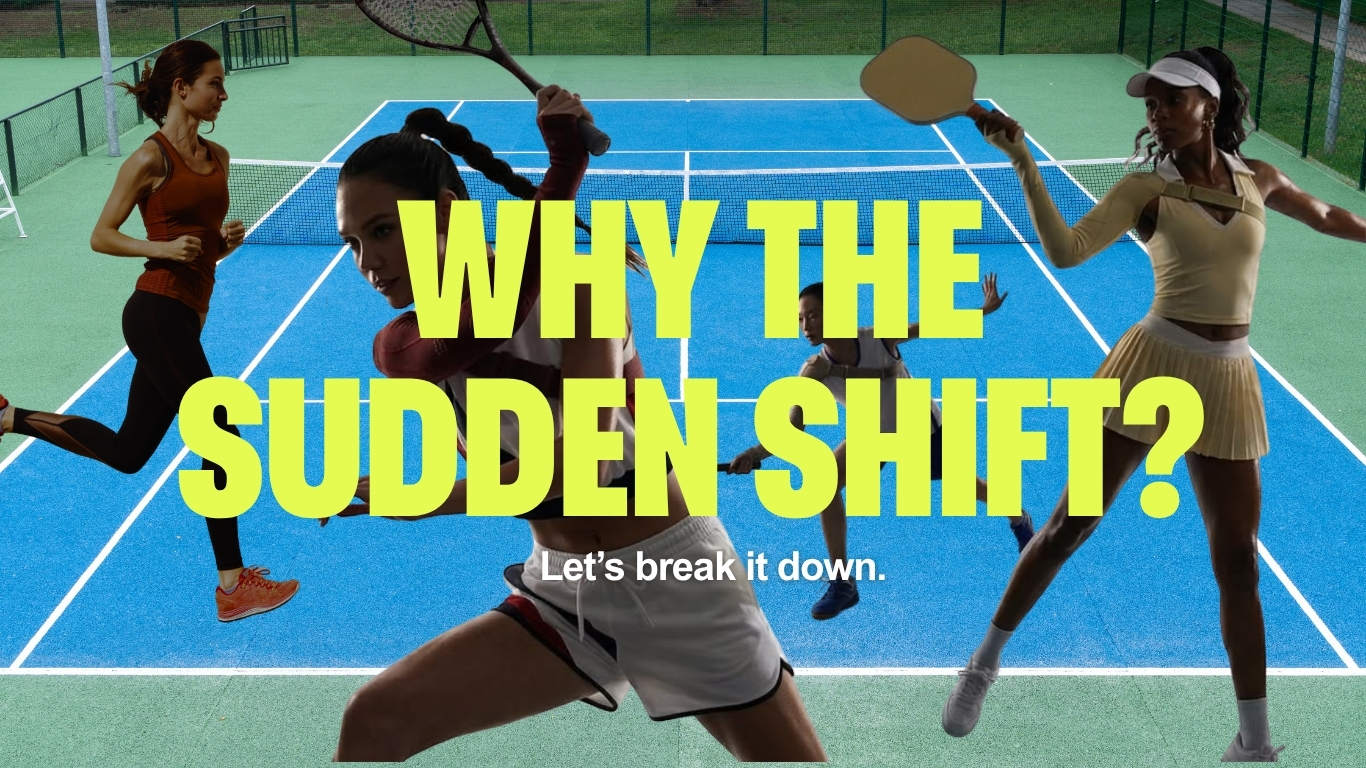
When did working out become the new way to hang out?
It’s 6 a.m. on a Saturday, and the city is already awake.
Runners weave through the UP Diliman Academic Oval and the streets of Bonifacio Global City. Nearby cafés begin filling with people still wearing their running shoes. Tennis courts are booked before breakfast, while pickleball games are already underway.
Not too long ago, weekends looked different.
Today, more young Filipinos are choosing to spend their free time on the court or the track. What once felt like a niche hobby has become part of everyday life, with running, tennis and pickleball attracting a new generation of beginners.
The shift is easy to spot. Scroll through TikTok or Instagram and you’ll likely see Strava screenshots, post-match selfies, “day in my life” videos and carefully coordinated activewear. A morning run can come with a playlist, a matching outfit and coffee afterward. A tennis session can become both a workout and a social activity
But beyond the posts, outfits and trending sounds is a bigger question:
Why are these sports suddenly everywhere?
The answer goes beyond a trend. Their rise reflects a shift in how Gen Z views fitness — not simply as exercise, but as a way to socialize, build routines, spend time offline and become part of a lifestyle.
The Lifestyle Looks Expensive
For all their popularity, these sports can feel intimidating before a person even steps onto the court.
Running may seem simple, but social media has turned it into an entire lifestyle. There are performance shoes, matching activewear, GPS watches, race registrations and post-run coffee. Tennis comes with rackets, court fees, lessons and tennis-inspired fashion. Pickleball has its own paddles, shoes, outfits and accessories.
The sport itself may be only one part of the cost.
For someone watching from the outside, it can create the impression that getting into these activities requires a certain amount of money — and a certain lifestyle to match. This perception matters.
Gen Z is not just seeing people play sports, they are seeing an entire version of life built around them. These activities look inviting and community-driven, but the lifestyle surrounding them can look out of reach. Yet the growing interest suggests that the desire to participate is stronger than the desire to simply look the part.
People want the morning run, the weekend match, the new routine and the chance to meet others. The challenge is figuring out which parts of the lifestyle are actually necessary and which are simply part of the aesthetic.
That gap between playing the sport and buying into the lifestyle is exactly where accessibility becomes important.
The Algorithm Didn’t Invent the Trend
Social media didn’t create running, tennis or pickleball, but it changed how Gen Z discovered them.
Instead of only watching professional athletes compete, young people now see friends, creators and other beginners trying the sports themselves. TikTok and Instagram are filled with first tennis lessons, casual pickleball games, and run-club videos.
The message is subtle but powerful: you don’t have to be an expert to participate.
Strava has become part of that culture, too. Originally designed to track workouts, the platform has evolved into a social space where users share routes, celebrate personal records and encourage one another through comments and “Kudos.”
A run can now become more than a run. It becomes a personal record, a shared challenge, a post on your feed or an invitation for someone else to join.
This reflects psychologist Albert Bandura’s theory of observational learning, which suggests that people are more likely to adopt behaviors they repeatedly see modeled by others, particularly when those behaviors appear achievable and rewarding.
When your feed is filled with friends joining run clubs, learning tennis or trying pickleball, participating yourself begins to feel possible.
The algorithm may not have invented these sports, it simply made them harder to ignore.
More Than a Workout
Social media may explain why people notice these sports, community helps explain why they stay.
Across Metro Manila, running clubs have become more than places to exercise. Morning runs often end with breakfast or coffee, turning workouts into opportunities to meet people. Pickleball has become a weekend activity for friends and families, while tennis lessons allow beginners to improve alongside others learning at a similar pace.
For many young Filipinos, the appeal is not just getting a workout. It is having somewhere to go, something to look forward to and people to do it with.
In a time when much of social life happens through screens, these activities offer a reason to be outside and together. The social aspect also changes the way people think about consistency. Going for a run alone can be easy to skip. Knowing that a group is waiting for you at 6 a.m. makes showing up feel different.
The sport becomes part of a routine. The routine becomes part of a social life.
When Fitness Became a Lifestyle
The popularity of these sports also reflects a broader change in how Gen Z defines wellness.
Fitness now overlaps with fashion, social life and self-expression. Tennis-inspired clothing has moved beyond the court. Coordinated activewear has become part of everyday wardrobes. Running shoes are styled as much for errands as they are for training. Strava screenshots have become recognizable symbols of an active lifestyle.
This is where the line between sport and lifestyle becomes harder to separate.
At first glance, it can be easy to dismiss the movement as another aesthetic trend. There is no denying that aesthetics can make a sport more appealing, but looking good online is not enough to explain why people continue showing up.
No TikTok video can make someone wake up before sunrise every weekend. No Instagram post can make someone keep practicing a tennis serve after weeks of missed shots. An expensive outfit cannot create the satisfaction of finishing a first 5K or finally getting a rally right.
Social media may spark curiosity. The experience is what turns curiosity into commitment.
A Sport for Everyone?
In a country where basketball has long dominated sports culture, more young Filipinos are expanding what an active lifestyle can look like. Running, tennis and pickleball are not replacing traditional sports. They are creating new spaces for movement, friendship and community.
But as these sports become increasingly tied to aesthetics and consumer culture, another question follows:
Do you need to buy the lifestyle to be part of it?
The answer should be no.
The shoes, outfits, watches and accessories may make the lifestyle look polished online, but they are not what make someone a runner, tennis player or pickleball player. What matters is participating — finding a way to start, learning as you go and figuring out what is actually worth spending on.
That does not mean these sports are always cheap. Court fees, equipment, coaching and events can add up. It means the cost of participation does not have to look like the cost of the lifestyle being sold online.
Maybe that is the real shift. Fitness is no longer just something we do, it has become part of how we live, connect and express ourselves.
And perhaps that is why the trend is here to stay.
Leave a Reply